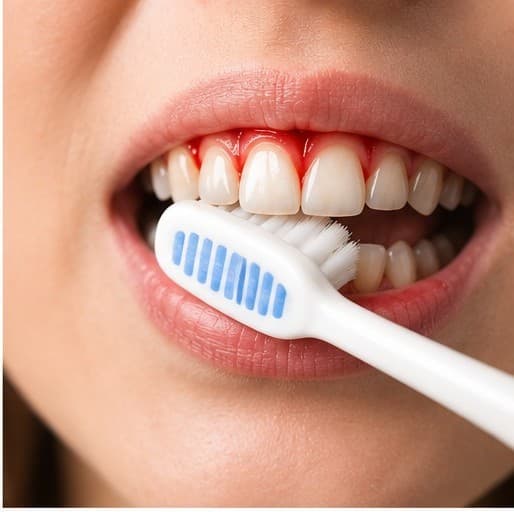
You see a little blood when brushing.Your first reaction might be:
"I should brush more gently."Or perhaps:"I'll stop brushing that area for a few days."
But bleeding gums are often a sign that something deserves attention.Plaque buildup can irritate the gums, causing inflammation. Gingivitis can cause gums to become red, swollen and prone to bleeding. If gum disease progresses, it can affect the tissues and bone supporting the teeth.So here's the strange part:
Bleeding can be a reason to improve your oral hygiene—not abandon it.
Why Do Gums Bleed?
One common cause is inflammation associated with plaque buildup.Plaque is a sticky film containing bacteria that forms on teeth.If it isn't removed effectively, it can irritate the gums.
The gums may become:
- Red
- Swollen
- Tender
- More likely to bleed
NIDCR identifies red, swollen and bleeding gums among the symptoms of gum disease.
What's Actually Happening?
Healthy gums form a protective seal around your teeth.When plaque accumulates around the gumline, the body's inflammatory response can cause the gum tissue to become swollen and more vascular.That can make the gums bleed more easily when brushing or cleaning between the teeth.This early stage is often referred to as gingivitis.
The good news?
Plaque-induced gingivitis can often be reversed with appropriate oral hygiene and professional care.But if gum disease progresses, the infection can extend deeper around the teeth.That's where things become more serious.The Problem With "I'll Just Stop Brushing"This is one of the worst responses to bleeding caused by plaque-related inflammation.If plaque is contributing to the problem, removing less plaque won't solve the underlying cause.
Instead, appropriate brushing and cleaning between the teeth are important.Of course, if your gums are severely painful, bleeding heavily or you have another dental condition, you should get professional advice rather than forcing an aggressive brushing routine.
The goal is effective, gentle cleaning—not attacking your gums.When Bleeding Gums Become a Bigger Warning,Pay particular attention if bleeding occurs alongside:
- Persistent bad breath
- Swollen gums
- Gum recession
- Tender gums
- Loose teeth
- Pain when chewing
- Tooth sensitivity
- Changes in how your teeth fit together
NIDCR lists bleeding gums, persistent bad breath, loose or sensitive teeth and pain during chewing among possible symptoms associated with periodontal disease.
Other Reasons Your Gums May Bleed
- Plaque isn't the only possible explanation.
- Bleeding can also be associated with:
- Trauma from aggressive cleaning
- Poorly fitting oral appliances
- Hormonal changes
- Certain medications
- Some medical conditions
- Other oral health problems
That's why persistent bleeding shouldn't automatically be self-diagnosed as gingivitis.
Conclusion
Your gums aren't supposed to be a daily source of blood.If they bleed repeatedly, don't panic—but don't ignore them either.Your gums may be giving you an early signal that your oral environment needs attention.Listen before the signal becomes a bigger problem.