Your dentist doesn't just look at your teeth.Sometimes, your teeth tell a story.A flattened edge might suggest repeated mechanical stress.Sensitivity could have multiple possible causes.
- Enamel wear may make your dentist ask about acidic drinks.
- Jaw soreness may prompt questions about clenching.
- Your mouth can provide clues about your everyday habits.
- And some of those habits may seem completely harmless.
Which Everyday Habits Can Affect Your Teeth?
Some habits that deserve attention include:
- Frequently sipping acidic drinks
- Using teeth to open packages
- Chewing very hard objects
- Grinding or clenching
- Poor plaque removal
- Frequent sugary snacks or drinks
- Smoking or tobacco use
- Ignoring persistent dental symptoms
- Aggressive brushing
- Regularly exposing teeth to acids
The important point is that not every habit causes damage in every person.Dental health is multifactorial.But repeated behaviours can influence risk.
Habit #1: Sipping Drinks All Day
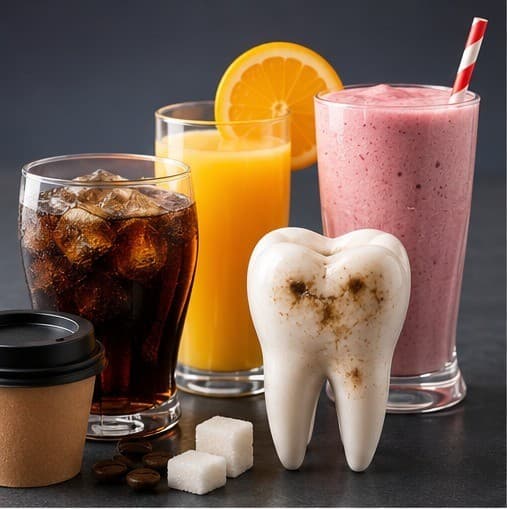
This is especially relevant for people who keep a bottle of soft drink, energy drink or acidic beverage beside them throughout the day.The problem isn't just what you're drinking.It's the repeated exposure.The ADA notes that the frequency and pattern of acidic exposure can influence erosive tooth wear.If you enjoy an acidic drink, consuming it in a more controlled pattern and rinsing with water afterward can reduce prolonged exposure.
Habit #2: Using Your Teeth as Tools
Opening packaging with your teeth might feel faster.
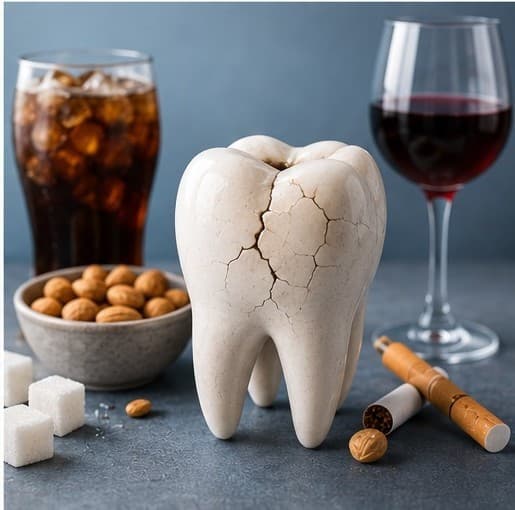
It isn't a good idea.Your teeth are designed primarily for biting and chewing food—not opening plastic packets, bottles or other objects.Using teeth as tools can create unnecessary mechanical stress and may contribute to chips or cracks.If something needs opening:Use the tool designed for it.Your teeth aren't scissors.
Habit #3: Chewing on Hard Objects
Some people chew:
- Pens
- Ice
- Nails
- Hard objectski
- Non-food items
Repeated mechanical stress can be rough on teeth.If you already have weakened, restored or cracked teeth, hard-object chewing may be particularly problematic.
Habit #4: Grinding Without Realising It
Bruxism is another hidden behaviour.
You may clench while:
- Working
- Driving
- Studying
- Exercising
- Sleeping
- Concentrating
NIDCR notes that bruxism can occur while awake or asleep and may be associated with tooth wear, jaw pain and headaches.The first step is recognising the behaviour.
Habit #5: "Healthy" Snacking All Day
Here's another surprising one.A person might say:"I don't drink soda."Great.But they may constantly snack on sweet foods throughout the day.Dietary sugars are associated with increased caries risk.The issue is not that one snack automatically causes a cavity.Oral health depends on the overall pattern of diet, plaque, saliva, fluoride exposure and individual risk.But frequent sugary exposures can make cavity prevention more difficult.
Habit #6: Brushing Too Aggressively
More pressure doesn't necessarily mean cleaner teeth.Aggressive brushing can irritate gums and contribute to mechanical wear in susceptible areas.The objective is:Effective cleaning—not maximum force.Your toothbrush doesn't need to win a fight with your teeth.
Habit #7: Ignoring Small Symptoms
This may be the most expensive habit of all.A person notices:
"Something feels slightly sensitive."Then waits.Then:"Food keeps getting stuck there."Waits again.Then:"Now it hurts."By this point, the problem may require more attention than it would have earlier.Not every symptom means a serious dental condition.But persistent or changing symptoms deserve professional evaluation.
Habit #8: Treating Bleeding Gums as Normal
If your gums repeatedly bleed, don't simply accept it as part of brushing.Plaque-induced inflammation can cause bleeding gums, and persistent gum problems can progress if untreated.Good oral hygiene and professional dental care are important parts of managing gum health.
Conclusion
- Your teeth don't have a diary.
- But they can leave clues.
- The drinks you sip.
- The things you chew.
- The way you brush.
- The way you clench.
- The symptoms you ignore.
Over time, these everyday behaviours can become part of your oral-health story.So don't wait for your teeth to tell the whole story through pain.Sometimes the smallest habits deserve the biggest attention.