Imagine looking at your teeth in the mirror.They look fine.You aren't experiencing pain.So you assume everything is okay.But here's the uncomfortable truth:
A tooth can have decay without hurting.
Pain isn't a mandatory warning sign for a cavity.Tooth decay is a disease process that can progress through different stages. Depending on where it is located and how advanced it becomes, you may not notice anything initially.This is one reason regular dental examinations matter.
Can a Cavity Really Not Hurt?
Yes.
A cavity may not cause noticeable symptoms during its early stages.Pain often becomes more likely when decay progresses deeper into the tooth and begins affecting structures that are more sensitive.But the absence of pain does not prove the absence of decay.That is why waiting for toothache before seeing a dentist isn't always a good strategy.
What's Actually Happening?
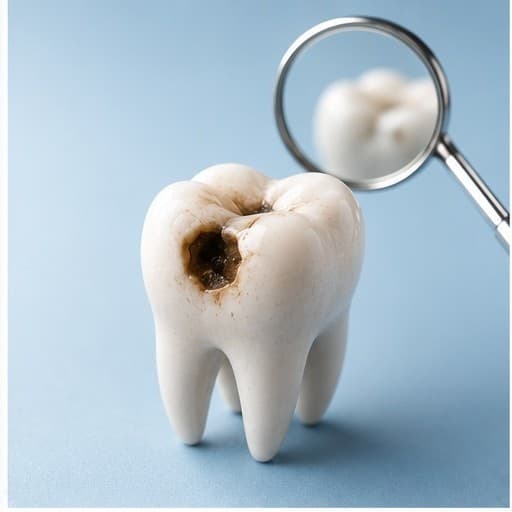
A tooth has several layers.The outer enamel is highly mineralized and protects the underlying structures.Underneath it is dentin.At the centre is the pulp, which contains nerves and blood vessels.When tooth decay progresses, it can move from the outer tooth structure toward deeper layers.Early decay may not produce an obvious sensation.
As the process advances, symptoms may eventually include:
- Sensitivity
- Pain
- Food getting trapped
- Visible holes
- Discoloration
- Pain when biting
- Persistent toothache
But not everyone experiences every symptom.
Why Does It Sometimes Stay Silent?
The location and depth of the decay matter.A small area of decay may not irritate the nerve.A cavity between two teeth may also be difficult for you to see in a mirror.And some dental problems aren't obvious without professional examination or dental X-rays when indicated.This is one reason dentists don't simply look at the visible front surfaces of your teeth.They assess the teeth, gums, bite and other structures systematically."But My Tooth Looks Normal"That's exactly why dental problems can be deceptive.A tooth can appear normal externally while developing problems in an area that's difficult to inspect yourself.
What Increases Your Risk?
Several factors can influence your risk of tooth decay.
These include:
- Frequent sugar consumption
- Poor plaque control
- Frequent acidic exposures
- Dry mouth
- Certain medications
- Existing dental restorations
- Difficulty cleaning between teeth
- Certain dietary patterns
- Individual susceptibility
Dental caries is multifactorial, meaning there isn't always one single cause.Signs You Shouldn't Ignore,Even if you don't have severe pain, book a dental assessment if you notice:
- New sensitivity
- A dark or white spot on a tooth
- Food repeatedly getting stuck
- A rough area on a tooth
- A visible hole
- Pain when chewing
- Bad taste around a particular tooth
- A filling that has chipped or feels different
These symptoms don't automatically mean you have a cavity.But they're worth checking.
Conclusion
A painless tooth isn't necessarily a problem-free tooth.Dental decay can develop quietly, particularly in areas that are difficult to see or clean.Regular examinations aren't about waiting until something hurts.They're about finding out what's happening before pain becomes the reason you finally pay attention.